




H13 vs H14 vs True HEPA: What Air Purifier Labels Really Mean
| HIGHLIGHTS • H13 vs H14: H14 offers higher filtration efficiency than H13. • True HEPA: The label doesn’t specify an H13 or H14 grade. • Look Beyond Filters: Check CADR, airflow, room coverage and filter cost. |
Buying an air purifier these days can be a daunting task because it is quite confusing; brands often use terms like H13, H14, or “True HEPA” and claim filtration rates of 99.97% or 99.99%. While these labels may look similar, they do not mean the same thing. Before making a purchase, you should understand these details, which are explained in this post.
H13 vs H14: What’s the Difference?
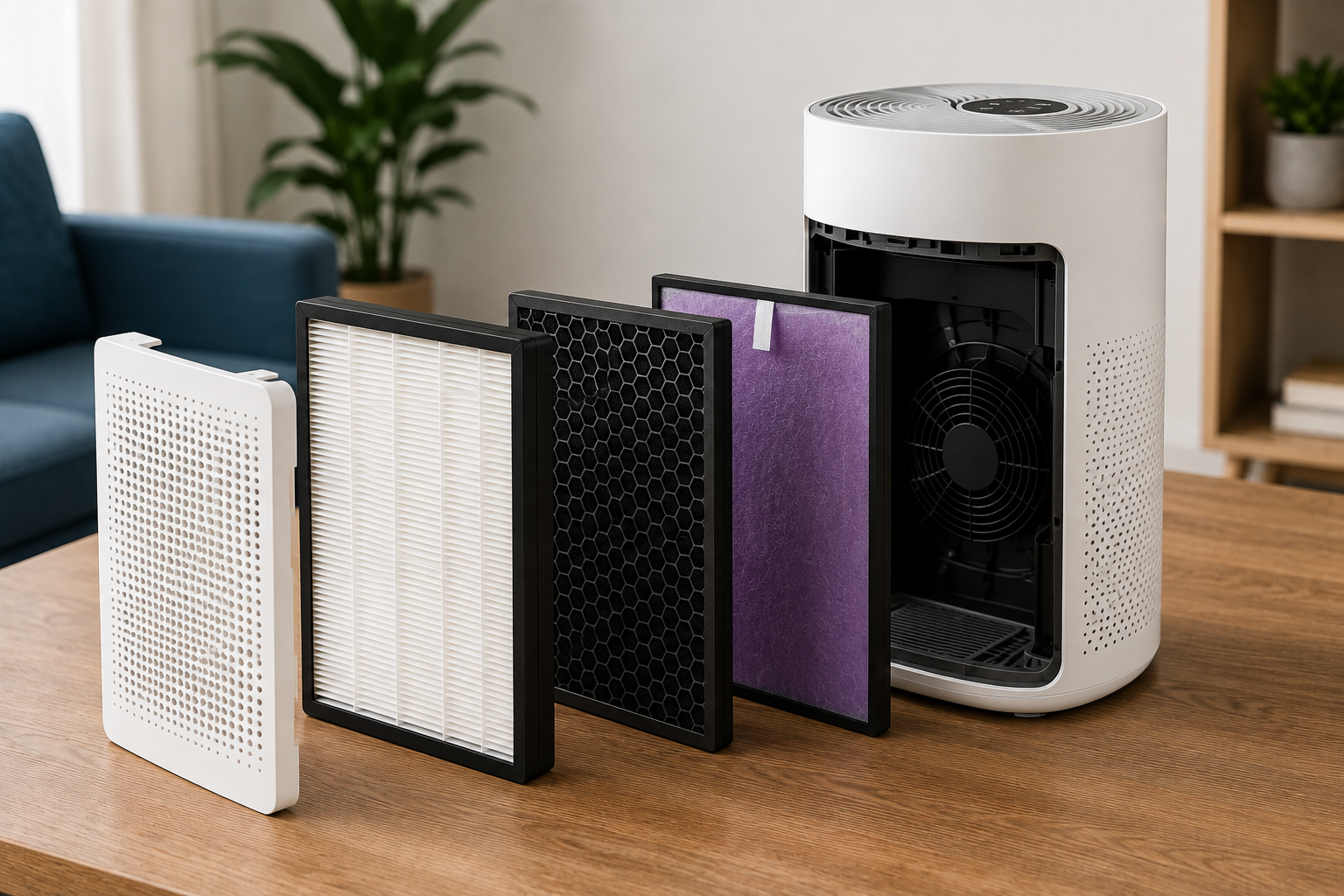
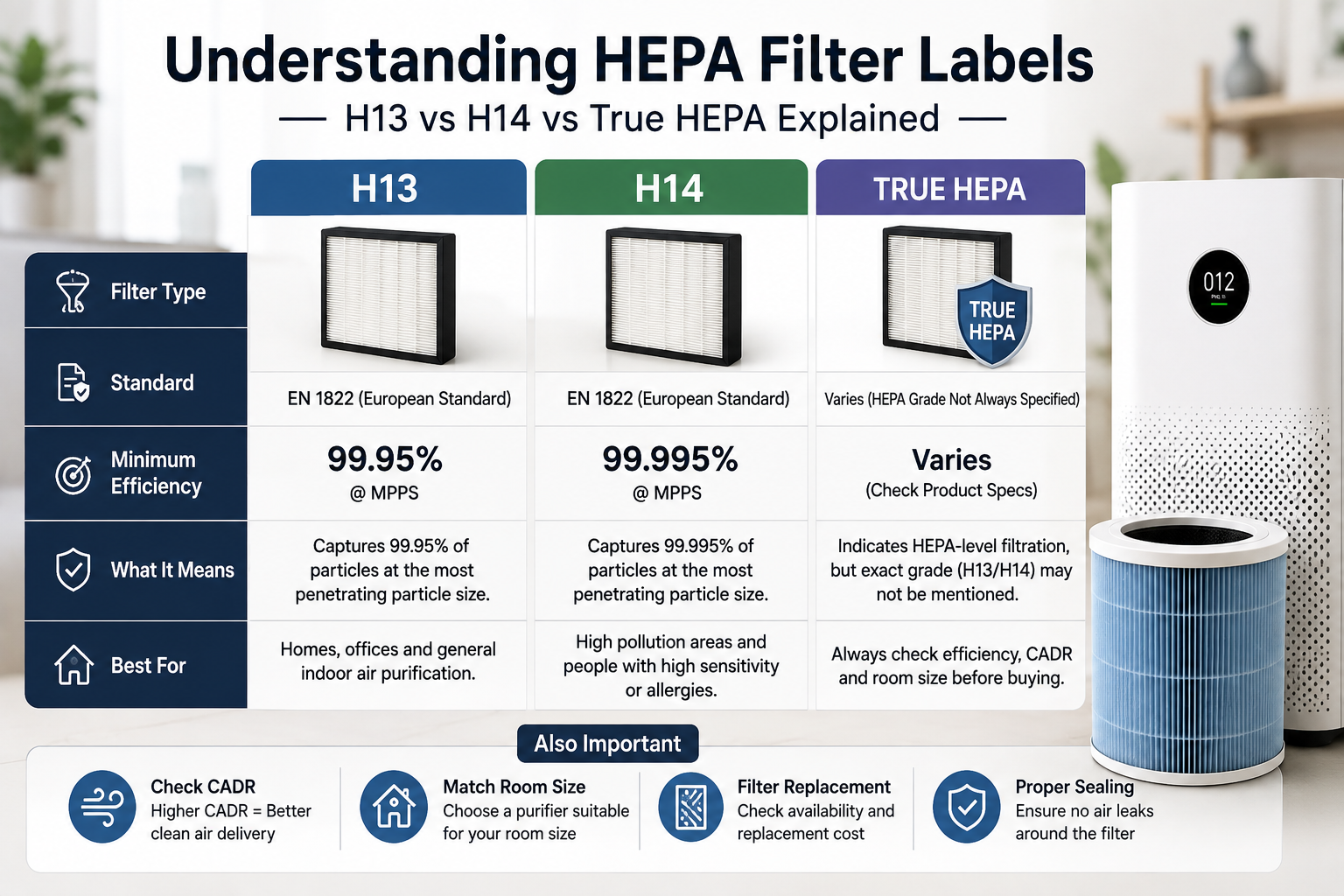
Under the EN 1822 standard, the difference between the H13 and H14 filters—based on HEPA classification—is that an H13 filter can purify up to 99.95% of the air, whereas an H14 filter can purify up to 99.995%. Therefore, while the H14 filter itself is more effective, this does not necessarily mean that the entire purifier will clean the room better.
Also Read : Apple iPhone 18 Pro Max: Expected Launch Date, Price, Specs, Features, and Colours
What Does True HEPA Mean?
The term “True HEPA” is primarily used to denote high-efficiency filters. Its main purpose is to distinguish the product from filters labeled merely as “HEPA-type” or “HEPA-like”;However, the “True HEPA” label alone does not indicate whether the filter is H13 or H14 grade. It is best to verify the efficiency, testing standards, or the specific filter classification specified by the manufacturer.
Also Read : Samsung Galaxy Z Flip 8 Expected Soon: Price, Specifications and Key Features Revealed
Are H13 and H14 Indian Standards?
No. H13 and H14 are not Indian filter grades. They are classifications associated with the European EN 1822 standard and can also be used for air purifiers sold in India. If a product claims BIS certification or compliance with an Indian standard, check exactly which standard has been tested and certified.
Also Read : iPhone Ultra vs Galaxy Z Fold 8: Expected Display, Camera, Processor, Battery and Price Differences
Don’t Choose an Air Purifier by HEPA Rating Alone
A higher filter rating isn’t the only thing that matters. CADR, airflow and room coverage are equally important because the purifier needs to move enough air through the filter to clean the room effectively. A good H13 purifier with stronger airflow can be a better choice than an H14 model with weak airflow.
Final Thought
When buying an air purifier, don’t simply choose the model with the biggest filtration percentage. Check the HEPA classification, CADR, room coverage, airflow and replacement filter cost. Understanding these specifications will help you choose a purifier that actually suits your room instead of paying extra just for a higher number on the box.
One thought on “H13 vs H14 vs True HEPA: What Air Purifier Labels Really Mean”