






OxygenOS and Realme UI Could Be Replaced by ColorOS on Future Devices, Says Report
| HIGHLIGHTS • Oppo may replace OxygenOS and Realme UI with ColorOS across future devices. • The move could simplify software development and reduce overall costs. • The report remains unconfirmed, with no official statement from Oppo, OnePlus or Realme. |
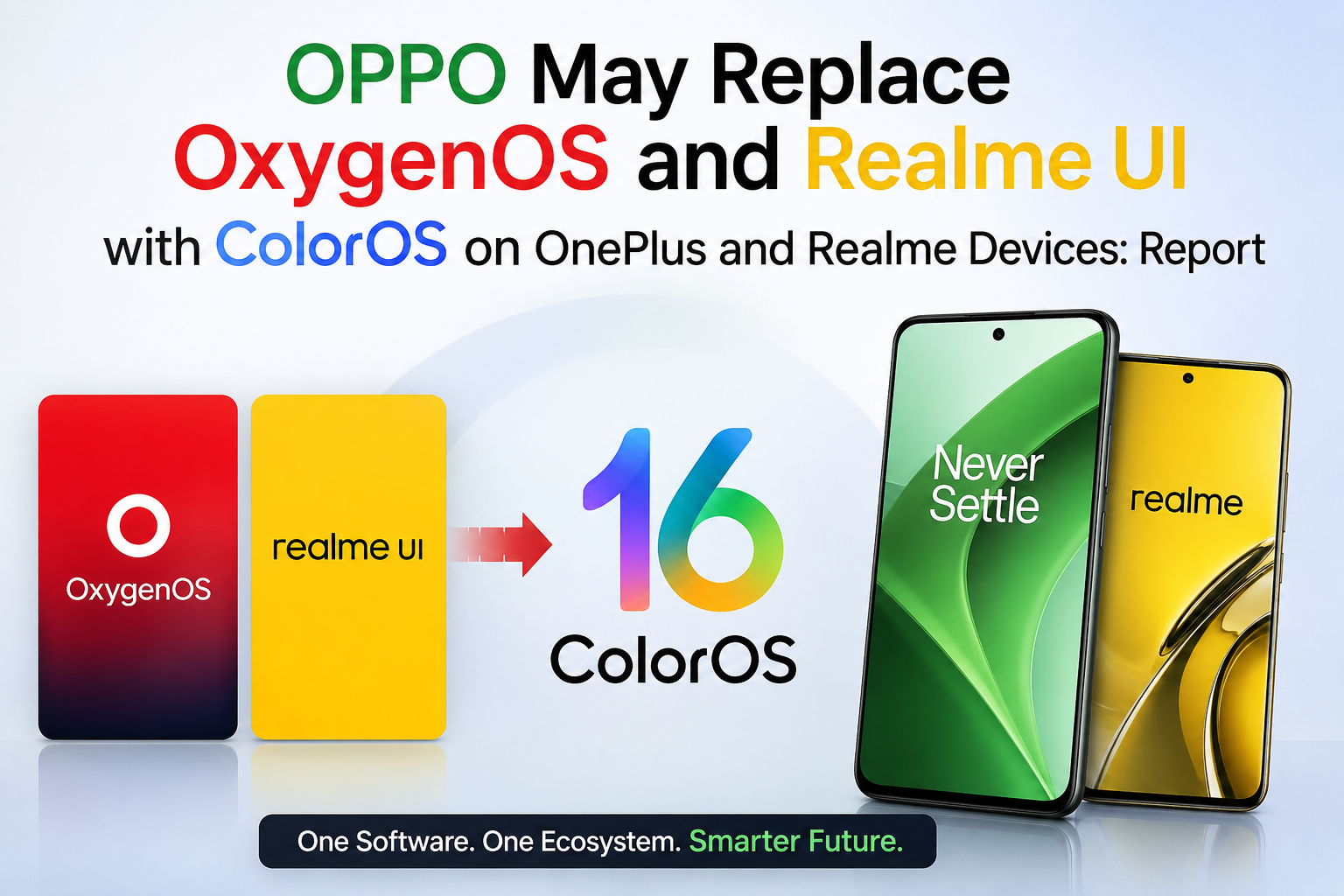
OnePlus and Realme smartphones could be set for a major software overhaul if recent reports are accurate. Oppo is reportedly considering a broader restructuring of its smartphone business, a move that could see the company retire both OxygenOS and Realme UI in favour of a single software platform based on ColorOS.
The reported strategy is aimed at simplifying software development across Oppo’s smartphone brands. Maintaining three separate Android interfaces requires significant engineering resources, ongoing updates and higher development costs. By adopting ColorOS as a unified operating system, Oppo could streamline software maintenance, speed up feature rollouts and improve overall efficiency.
Although neither OnePlus nor Realme has officially confirmed the report, industry sources suggest the transition could be part of Oppo’s long-term plan to create a more unified ecosystem. This also aligns with earlier reports indicating that Oppo may further integrate OnePlus and Realme into its broader business strategy while reducing the distinction between the brands.

According to a report from Smartprix, Oppo is reportedly planning to simplify its software ecosystem by making ColorOS the primary operating system across its smartphone brands. Currently, Oppo devices run ColorOS, while OnePlus and Realme offer OxygenOS and Realme UI, respectively. Although these interfaces are built on the same Android framework, each has its own design, features and branding.
The report suggests that maintaining three separate user interfaces requires considerable investment in software development, testing and engineering. By consolidating its software efforts around ColorOS, Oppo could reduce development costs, speed up updates and focus its resources on enhancing a single platform instead of maintaining multiple versions.
Also Read : Samsung Galaxy Z Flip 8 Expected Soon: Price, Specifications and Key Features Revealed
If the reported plan moves forward, future OnePlus and Realme smartphones may ship with ColorOS out of the box instead of their existing custom skins. However, there is currently no indication that existing devices will receive an immediate switch, and Oppo has not shared any details about how a potential transition would work for current users.
Beyond software, the report also points to a broader restructuring of Oppo’s smartphone business. OnePlus is said to concentrate primarily on markets such as India and China, while Realme could shift its attention towards expanding its presence in international markets and scale back its focus in China.
The report further claims that OnePlus’ after-sales support in India may eventually be integrated into Oppo’s service network. As part of this transition, standalone OnePlus service centres could gradually be replaced by Oppo-operated facilities, although no official timeline has been confirmed.
Also Read : Vivo X200 Price Drops Below Rs 60,000 on Flipkart: Is It Worth Buying Now?
Another significant claim is that Realme may eventually operate as a smartphone series under the Oppo brand rather than continuing as an independent sub-brand. However, this information is currently linked only to the Indian market, and it remains unclear whether a similar strategy would be adopted globally.
Meanwhile, OnePlus is reportedly being positioned as Oppo’s online-first smartphone brand. The company has already closed its exclusive offline retail stores in India, and reports suggest that OnePlus websites in countries including Germany and Spain have begun showcasing Oppo products, further indicating closer collaboration between the two brands.
As of now, neither Oppo, OnePlus nor Realme has officially responded to these reports. Until the companies make a formal announcement, the reported changes should be treated as speculation rather than confirmed plans.

Tecgadg is your go-to destination for the latest Technology news, Smartphone updates, Entertainment, Gadget reviews, AI tools, and Useful apps. We deliver easy-to-understand guides, trending updates, and helpful insights to keep you informed in the fast-changing digital world.
One thought on “OxygenOS and Realme UI Could Be Replaced by ColorOS on Future Devices, Says Report”